Introduction
In today’s online world, having a website is not enough. People search on Google every day to find products, services, and information. If your website does not appear in search results, you may lose valuable customers to competitors. This is where Affordable SEO Services can make a difference. SEO helps businesses improve their online visibility, attract relevant visitors, and grow organically. Whether you run a small business, startup, local company, or eCommerce store, understanding SEO can help you build a stronger digital presence and achieve long-term growth.
What is SEO?
SEO, or Search Engine Optimization, is the process of improving a website so that it appears higher in search engine results. The goal is to increase organic traffic from search engines like Google, Bing, and Yahoo.
When someone searches for a product or service, search engines try to show the most relevant and useful results. SEO helps search engines understand your website and determine whether it matches a user’s search intent.
SEO is not a one-time task. It is an ongoing process that involves improving content, website structure, technical performance, and online authority.
Many businesses invest in Affordable SEO Services because SEO offers long-term benefits without relying entirely on paid advertising.
Why SEO is Important for Business Growth
Every business wants more customers, better visibility, and increased revenue. SEO helps achieve these goals by making it easier for potential customers to find your website.
Some major benefits of SEO include:
• Higher search engine rankings
• Increased website traffic
• Better user experience
• Improved brand awareness
• More qualified leads
• Higher conversion rates
• Long-term return on investment
Unlike paid advertisements that stop generating traffic when the budget ends, SEO continues to deliver value over time.
How Search Engines Work
Before understanding SEO strategies, it is important to know how search engines work.
Search engines follow three main steps:
Crawling
Search engines use automated bots called crawlers to discover webpages across the internet.
Indexing
After discovering a page, search engines store and organize information in their database.
Ranking
When users perform a search, search engines analyze hundreds of factors to decide which pages should appear first.
SEO helps improve these ranking factors so websites can gain better visibility.
Types of SEO
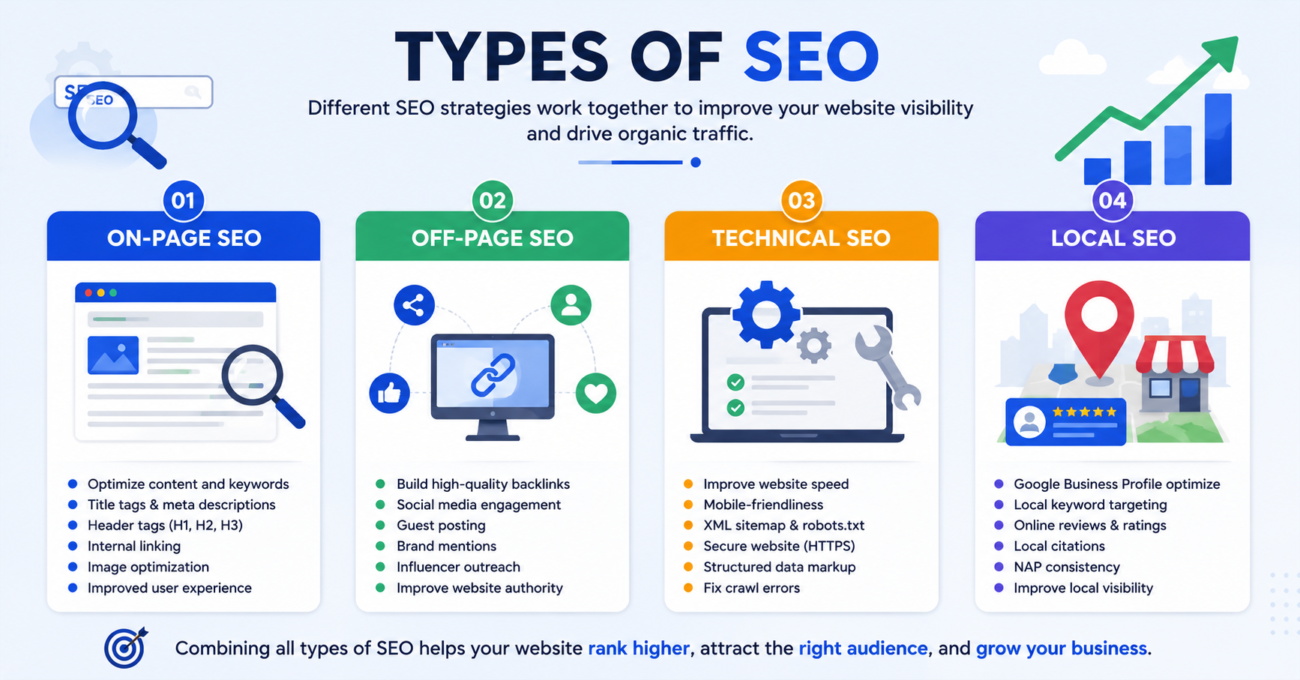
SEO is divided into several categories. Each type plays an important role in improving website performance and search visibility.
On-Page SEO
On-page SEO refers to optimizations made directly on a website.
Key elements include:
• Title tags
• Meta descriptions
• Header tags
• URL structure
• Internal linking
• Keyword placement
• Content quality
• Image optimization
On-page SEO helps search engines understand the topic and relevance of a webpage.
Benefits of On-Page SEO
• Better rankings
• Improved user experience
• Higher click-through rates
• Better content relevance
Off-Page SEO
Off-page SEO includes activities performed outside the website to improve authority and trust.
Common off-page SEO activities include:
• Link building
• Guest posting
• Brand mentions
• Social media sharing
• Online PR
Search engines view quality backlinks as votes of confidence.
The stronger your backlink profile, the greater your chances of ranking higher.
Technical SEO
Technical SEO focuses on website infrastructure and performance.
It helps search engines crawl and index a website properly.
Important technical SEO elements include:
• Website speed
• Mobile responsiveness
• XML sitemaps
• HTTPS security
• Structured data
• Canonical tags
• Core Web Vitals
Many businesses include technical improvements within their SEO packages because they create a strong foundation for all other SEO activities.
Local SEO
Local SEO helps businesses appear in local search results.
Examples include searches like:
• Digital marketing agency near me
• Best restaurant in Delhi
• Dentist near me
Local SEO includes:
• Google Business Profile optimization
• Local citations
• Review management
• Location-specific content
• NAP consistency
Local SEO is especially useful for businesses serving customers within specific geographic areas.
E-Commerce SEO
E-commerce SEO focuses on online stores and product pages.
Key areas include:
• Product page optimization
• Category page optimization
• Product descriptions
• Technical improvements
• Internal linking
• Schema markup
Good eCommerce SEO helps increase product visibility and online sales.
Mobile SEO
Since most users browse through mobile devices, mobile SEO has become essential.
Mobile SEO includes:
• Responsive design
• Fast loading speed
• Mobile-friendly navigation
• Optimized images
Google primarily uses mobile-first indexing, making mobile optimization critical.
Enterprise SEO
Enterprise SEO is designed for large organizations with extensive websites.
It focuses on:
• Large-scale content management
• Advanced technical optimization
• Website architecture
• Data analysis
• Automation
Enterprise SEO often requires dedicated teams and advanced strategies.
Understanding SEO Marketing
SEO marketing is the process of using SEO strategies to attract potential customers through organic search results.
Instead of paying for every visitor, businesses improve their visibility naturally.
SEO marketing focuses on:
• Creating valuable content
• Improving search rankings
• Building website authority
• Generating qualified traffic
The primary goal is to connect businesses with users who are actively searching for solutions.
The Role of SEO Digital Marketing
SEO digital marketing combines search engine optimization with broader online marketing efforts.
It works alongside:
• Content marketing
• Social media marketing
• Email marketing
• Conversion optimization
• Analytics tracking
When SEO is integrated into a complete digital marketing strategy, businesses often achieve stronger and more sustainable growth.
Key Components of Search Engine Optimization
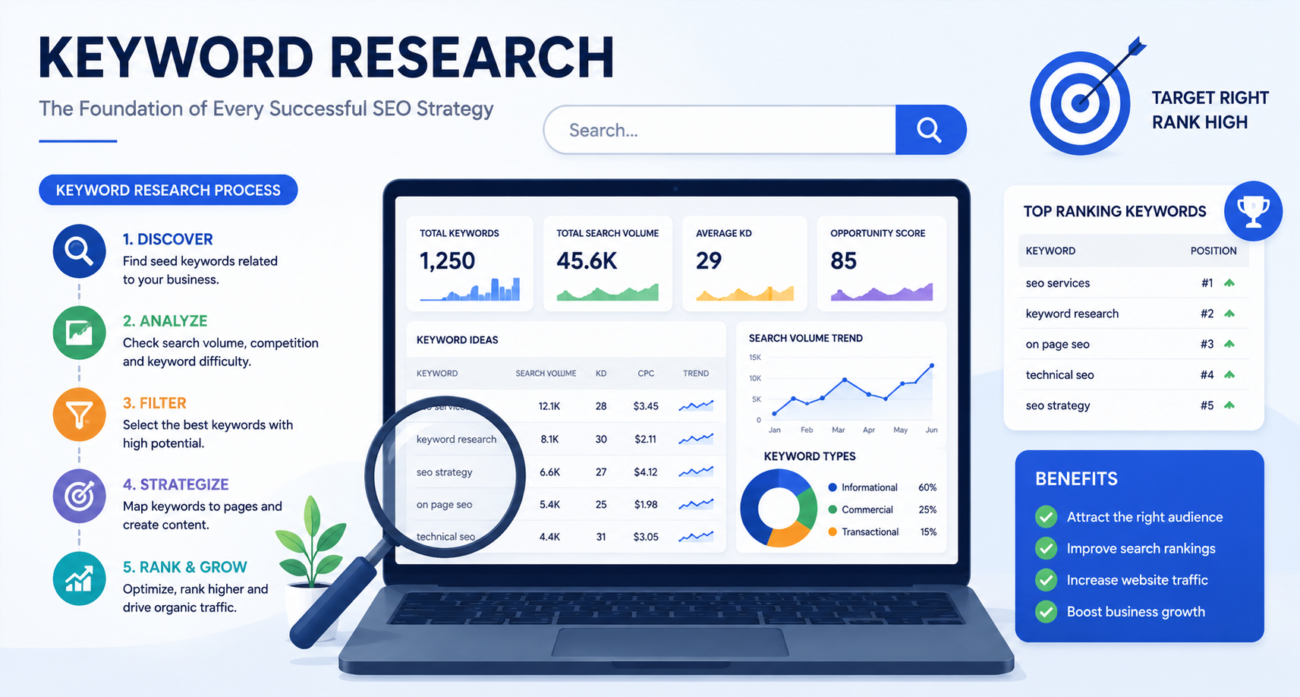
Successful SEO involves several important elements.
Keyword Research
Keyword research identifies the terms people use when searching online.
Good keyword research helps businesses:
• Understand customer intent
• Discover new opportunities
• Create relevant content
• Improve rankings
Examples of keyword categories include:
• Informational keywords
• Commercial keywords
• Transactional keywords
• Local keywords
Content Optimization
Content remains one of the most important ranking factors.
Quality content should:
• Solve user problems
• Answer common questions
• Be easy to read
• Include relevant keywords naturally
• Provide useful information
Content should always be written for users first and search engines second.
Link Building
Backlinks continue to be an important ranking factor.
Quality backlinks help:
• Improve authority
• Increase trust
• Boost rankings
• Generate referral traffic
Effective link building focuses on relevance and quality rather than quantity.
User Experience
Search engines want users to have positive experiences.
Important user experience factors include:
• Easy navigation
• Fast page speed
• Mobile friendliness
• Clear website structure
• Helpful content
A better user experience often leads to better rankings.